
As a small business owner in the United States, you’ve likely encountered Form 1099-MISC, especially if you’ve hired independent contractors or made certain types of payments throughout the year. This form is essential for staying compliant with IRS regulations, but it can be confusing if you’re not familiar with it. In this blog, we’ll break down everything you need to know about Form 1099-MISC, from what it is to how to prepare and file it correctly.
What is Form 1099-MISC?
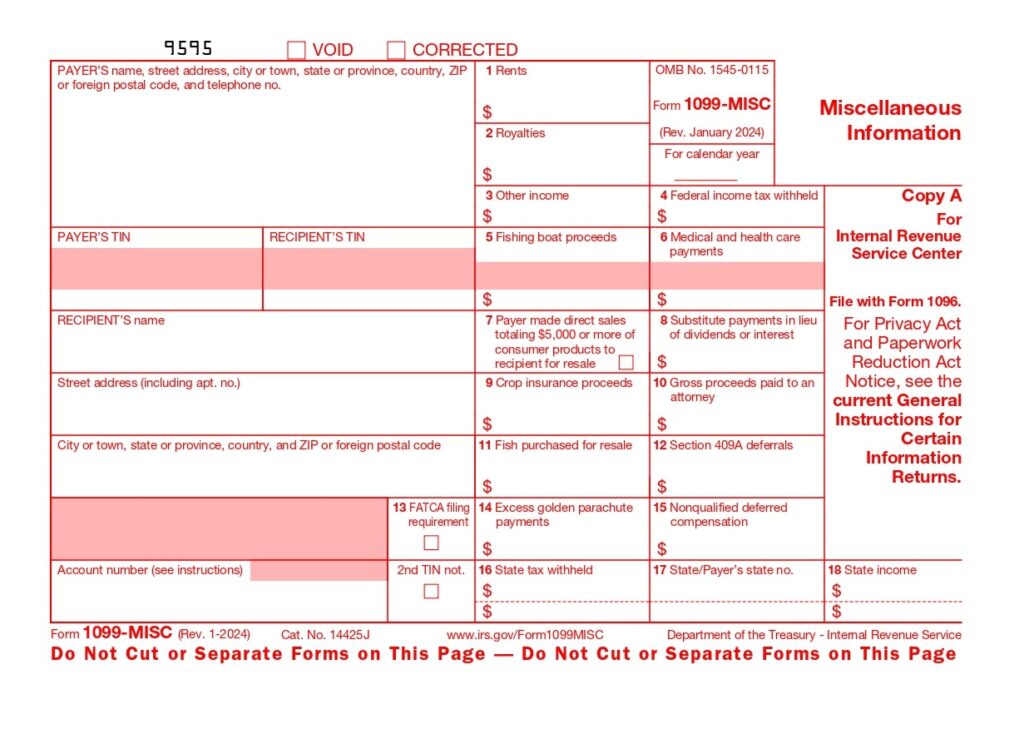
Form 1099-MISC is an IRS tax form used to report miscellaneous income. It’s typically used by businesses to report payments made to individuals who aren’t employees, such as independent contractors, freelancers, and other service providers. If you’ve paid $600 or more to a non-employee for services during the tax year, you’re generally required to issue a from 1099-MISC to the recipient and file it with the IRS.
You must file Form 1099-MISC for each person to whom you’ve paid during the year:
- At least $10 in royalties or broker payments in lieu of dividends or tax-exempt interest.
- At least $600 in:
- Rents: Payments for office space, equipment, or land.
- Prizes and Awards: Cash prizes or awards given in the course of business.
- Other Income Payments: Miscellaneous payments like legal settlements or crop insurance proceeds.
- Medical and Health Care Payments: Payments made to doctors, hospitals, or other medical providers.
- Crop Insurance Proceeds: Payments made to farmers under insurance policies.
- Cash Payments for Fish: Payments made to individuals engaged in the trade or business of catching fish.
- Payments to Attorneys: Payments made for legal services, including settlements.
- Any Fishing Boat Proceeds: Payments made to individuals working on fishing boats.
Additionally, use Form 1099-MISC to report when you have directly sold at least $5,000 of consumer products to a buyer for resale anywhere other than a permanent retail establishment. Each of these categories must be accurately reported to ensure compliance with IRS requirements.
How to Prepare Form 1099-MISC
Preparing Form 1099-MISC doesn’t have to be daunting. Follow these steps to ensure accuracy and compliance:
- Gather Necessary Information: Collect the recipient’s information, including their name, address, and Taxpayer Identification Number (TIN). You can obtain this using Form W-9, which the recipient should complete and return to you. Without a correct TIN, you may be subject to backup withholding, which requires you to withhold 24% of the payment for the IRS.
- Determine the Correct Amount to Report: Review your records to determine the total amount paid to the recipient during the year. Ensure that only qualifying payments, such as services provided, are included. Remember, payments made via credit card or third-party networks (e.g., PayPal) should not be included on Form 1099-MISC; these are reported on Form 1099-K.
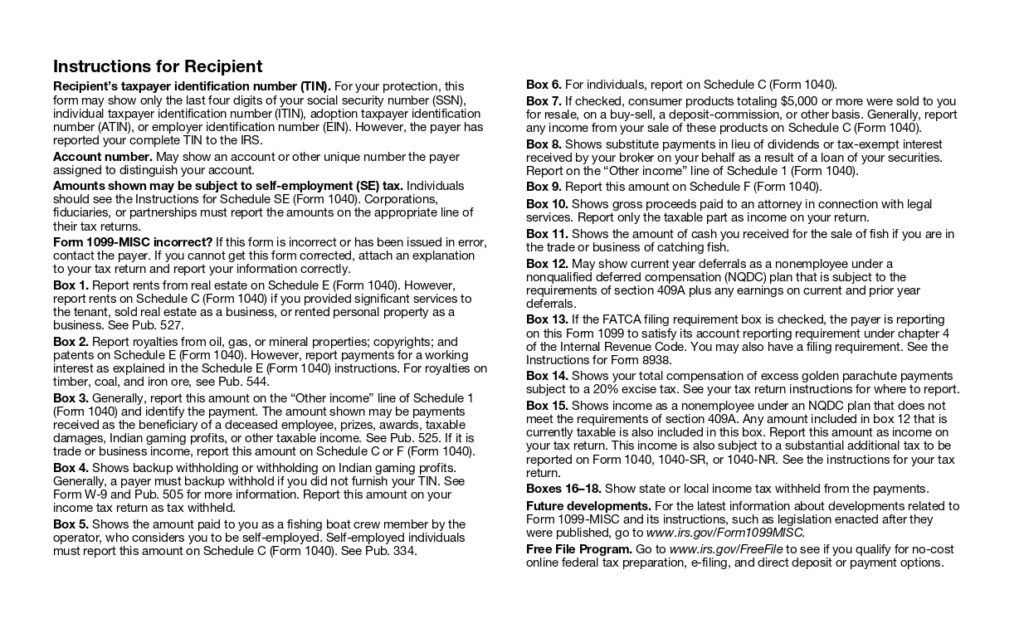
- Fill Out the Form: Fill out the required boxes on Form 1099-MISC, including the recipient’s information and the amount paid. Be careful to enter the information correctly to avoid issues with the IRS. Each box on the form corresponds to different types of payments, so ensure that you’re entering amounts in the correct fields.
- File the Form: Submit Copy A of the form to the IRS and Copy B to the recipient. You can file the form electronically through the IRS FIRE system or by mail, but electronic filing is required if you have 250 or more forms. For businesses with fewer forms, electronic filing is still recommended for its efficiency and quicker processing times.
Steps for Filing Form 1099-MISC
- Verify the Information: Double-check all details, such as TINs and payment amounts, to avoid common errors. Mismatches or inaccuracies can lead to delays or penalties. It’s also important to review the filing requirements to determine whether state filing is necessary, as some states require separate submissions.
- File by the Deadline: Ensure you file by the appropriate deadlines. Generally, Copy B should be sent to the recipient by January 31st, and Copy A should be filed with the IRS by the end of February if filing by mail, or by March 31st if filing electronically. Filing late can result in penalties ranging from $50 to $280 per form, depending on how late the form is filed.
- Keep Records: Retain copies of the forms and proof of filing for your records. This is crucial in case of any discrepancies or audits. The IRS recommends keeping these records for at least three years, but longer retention may be advisable in certain situations.
Common Mistakes to Avoid
- Incorrect TINs: Ensure that the recipient’s TIN is correct. Mismatches can lead to penalties from the IRS, as well as delays in processing. If you can’t obtain a correct TIN, you must still file the form and indicate that backup withholding was applied.
- Late Filing: Missing the filing deadline can result in hefty fines. Mark your calendar and file on time. It’s also wise to prepare early to handle any unexpected issues that may arise.
- Misreporting Income: Accurately report the amount paid to the recipient. Over-reporting or under-reporting can cause issues for both you and the recipient. Double-check your records to ensure accuracy, and consult an accountant if you’re unsure of which payments to include.
- Forgetting to File: Even if a recipient doesn’t provide their TIN or if they dispute the amount, you must still file the 1099-MISC with the information you have. Failure to file can lead to significant penalties, and in some cases, the IRS may disallow deductions related to the payments made.
Final Thoughts
Form 1099-MISC is a critical part of tax reporting for small businesses. By understanding what it is, how to prepare it, and avoiding common pitfalls, you can ensure smooth compliance with IRS regulations. Proper handling of this form not only keeps your business in good standing with the IRS but also fosters transparency with your service providers.
Need help with your tax forms? At Profitable Solution, we specialize in assisting small businesses with your accounting and tax preparation needs. Visit us at ProfitableSolution.com to learn more about our services and how we can support your business throughout the tax season and beyond!
This post is to be used for informational purposes only and does not constitute legal, business, or tax advice. Each person should consult his or her own attorney, business advisor, or tax advisor with respect to matters referenced in this post. Profitable Solutions assumes no liability for actions taken in reliance upon the information contained herein.